
How to Build a Revenue Operations Function From the Ground Up
Your company is on a growth tear. Marketing is running campaigns that flood the funnel with leads. Sales is hustling to close deals. Customer success is working overtime to keep renewals on track.
On paper, it looks like everything should be clicking. But in reality? The gears aren’t meshing. Marketing swears they’re sending qualified leads, sales argues those leads never convert, and customer success feels like they’re cleaning up a mess no one warned them about. Leadership opens up three different reports—each one telling a completely different story about revenue.
That’s the moment when most companies realize they need Revenue Operations. RevOps isn’t just another ops function; it’s the connective tissue that makes sure all those moving parts—marketing, sales, success—actually move in the same direction.
And it’s not a fringe idea anymore. Gartner predicts that by 2026, nearly 75% of the world’s fastest-growing companies will have a RevOps model in place (up from less than 30% today). In other words: RevOps has gone from “nice experiment” to “must-have growth engine.”
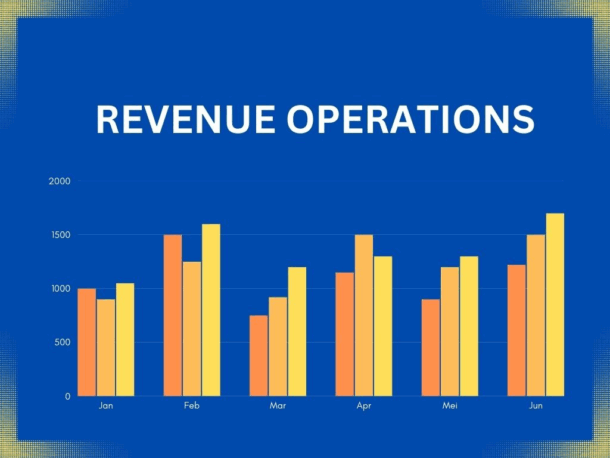
Why a Revenue Operations Strategy Matters
In most companies, teams report success in totally different ways. Marketing points to leads. Sales points to closed deals. Customer success points to renewals. The problem? None of these tell the whole story. Leadership ends up with three different dashboards and no clear picture of revenue health.
A strong revenue operations strategy fixes that by:
1. Creating a single source of truth: All leads, opportunities, and accounts flow into the same system. No more fights over whose numbers are “right.”
2. Connecting the customer journey: From first click to renewal—every touchpoint is mapped so teams can see the full lifecycle.
3. Improving attribution: Forget guessing which campaign “really worked.” Advanced models highlight what actually influenced revenue.
4. Speeding up sales cycles: Cleaner data on top of automation means reps spend less time chasing dead leads and more time with serious buyers.
How to Build a RevOps Function from Scratch?
Step 1: Start With the Big Picture
Before you dive into tools or processes, pause and ask: what are we actually trying to achieve?
Is it a faster pipeline velocity? Higher win rates? Better customer lifetime value? Too many teams jump into dashboards without a clear North Star — and that’s how RevOps turns into a reporting exercise instead of a growth driver.
Think of this step as drawing the map before you start driving. Once you know the destination, everything else — KPIs, tech, processes — gets way easier to figure out.all next decisions and ensure that execution supports measurable business outcomes.
Step 2: Align Teams on Shared Metrics
Here’s the ugly truth: misalignment isn’t about effort, it’s about definitions. Marketing says a lead is “qualified,” sales says “absolutely not,” and customer success is stuck in the middle.
RevOps fixes this by forcing shared definitions and building real-time dashboards everyone can see. Suddenly, you’re not arguing over whose spreadsheet is “right” — you’re looking at the same scoreboard.
When that happens, trust in the data goes up, and finger-pointing goes down.
Step 3: Standardize and Integrate Your Tech Stack
Every RevOps pro has walked into a tech stack that looks like a junk drawer — CRMs not talking to marketing platforms, duplicate records everywhere, and a “single source of truth” that exists only in theory.
The cure? Pick a system of record (usually Salesforce or HubSpot), then clean and connect everything to it. That means scrubbing duplicates, aligning fields, and setting up automated data checks.
It’s not glamorous, but when your systems actually talk to each other, attribution works, forecasting sharpens, and leadership stops questioning the numbers.
Step 4: Automate Lead Routing and Buying Group Visibility
If you’re still manually assigning leads, you’re bleeding time. Reps wait hours (sometimes days) before they touch a lead, and by then? The prospect has already moved on.
Automation solves this. Leads get routed instantly to the right rep. Buying groups are mapped automatically. Campaign influence is tracked across every touchpoint.
The result: sellers spend less time clicking buttons in CRM, and more time actually selling.
Step 5: Continuously Optimize Lifecycle Models and Attribution
Here’s the biggest misconception: building RevOps isn’t a “one and done” project. It’s a living system that needs tuning as your company grows.
Your attribution model that worked at $10M ARR might break at $50M. Your lifecycle stages may need to expand when you add a product line. Your dashboards will need a refresh every time leadership changes strategy.
The best RevOps teams treat this like an ongoing experiment — review, adjust, repeat. Over time, that discipline compounds into better forecasts, smarter investments, and faster sales cycles.
RevOps Today and Beyond
Revenue operations are no longer optional. It is the operating system for modern growth.
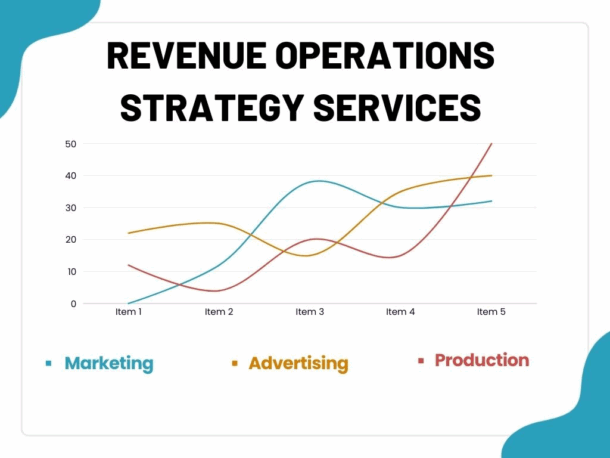
Does your organization struggle with siloed data, inconsistent metrics, or a lack of visibility into what drives the pipeline? If yes, then now is the time to adopt a revenue operations strategy that scales. With the right revenue operations strategy services, you can unify teams, accelerate processes, and create a reliable engine for predictable revenue growth.

Recommended For You
Revolutionizing Lives: The Impact of Grocery Delivery in Noida

Webparx
Webparx serves as your ultimate destination for pragmatic, valuable and ingenious solutions aimed at simplifying every facet of your hectic lifestyle.