
How AI in Software Testing Improves Accuracy and Reduce Manual Error?
With the fast-moving environment in software development today, products need to be of the utmost quality. The pressure to release software faster without compromising performance and user experience has led to employing Artificial Intelligence (AI) as a major tool in software testing. AI-powered software testing services, thus, revolutionized the whole face of testing in better accuracy and greatly reduced manual errors.
This article will now examine how AI has changed the landscape of software testing and how organizations can take advantage of it in improving their testing strategies.
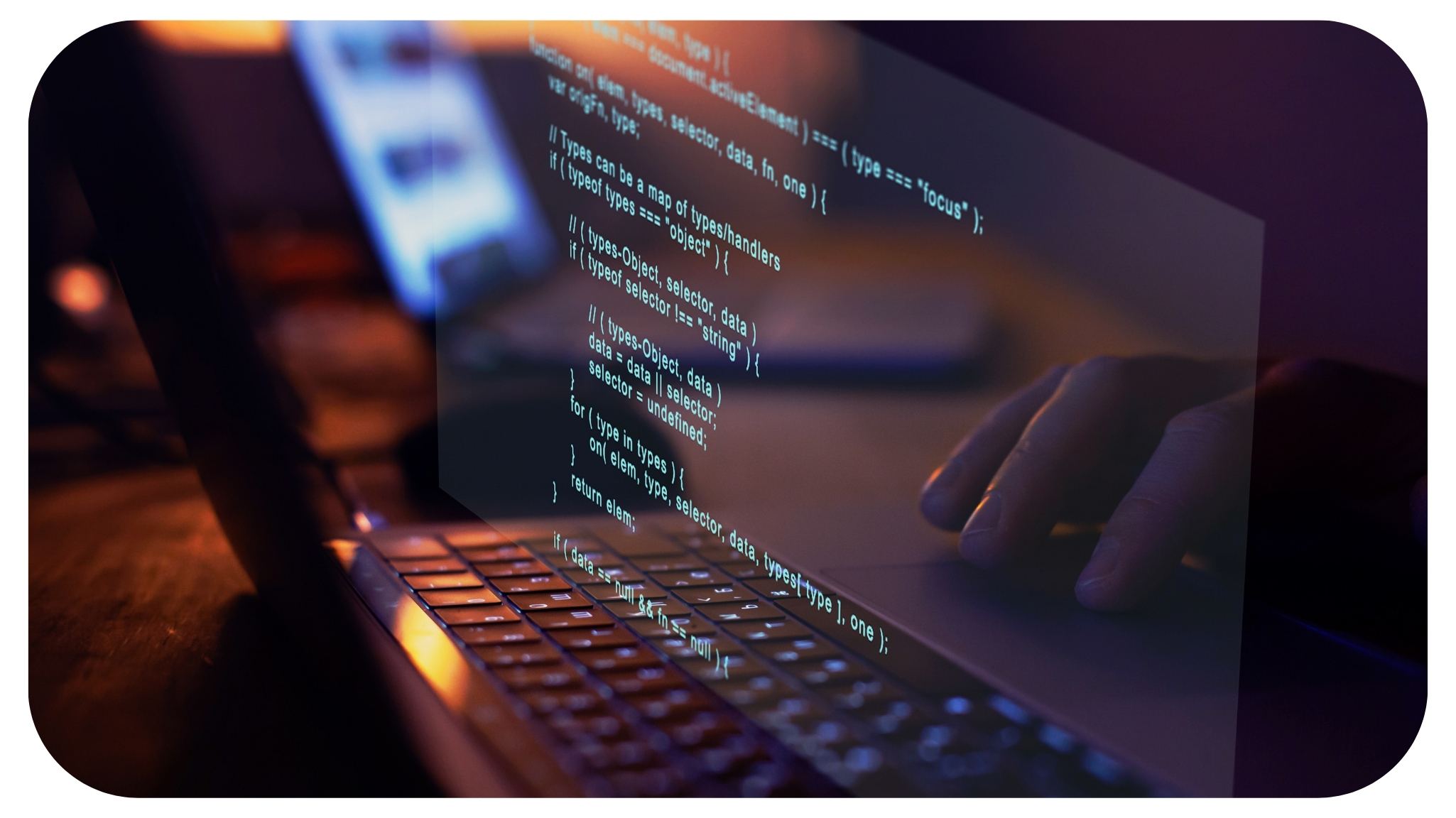
1. Understanding AI in Software Testing
- Software testing under AI refers to the use of an array of ML algorithms, natural language processing, and other AI technologies to automate and enhance the software testing process. Unlike conventional manual testing that requires human testers to execute test cases and find bugs, AI tools rely on intelligent algorithms to analyze code, identify problems, and even predict locations of likely defect occurrence. The approach translates into fast testing cycles, fewer errors, and greater accuracy.
- Decision-making performed by AI tools could almost resemble that of a human, as it learns from past test cases and improves itself. This way, software testing services keep getting more efficient and less prone to error, which proves to be invaluable for organizations that handle software systems of great complexity levels, e.g., when it comes to Salesforce used for CRM and business processes.
2. The Key Benefits of AI in Software Testing
AI testing differs from legacy manual testing in so many aspects, and most of these include greater accuracy in the process, speed, and scaling.
A. Improving Accuracy and Specificity
- In manual testing, humans serve as testers; therefore, they may not catch essential bugs due to fatigue, distraction, or testing scenario limitations.
- Therefore, test automation is way more accurate with AI.
- The tests can be executed in a more thorough fashion including a broader spectrum of instances which helps in highlighting flaws in code that may not be detected through manual tests.
- In addition, AI systems learn continuously from historical test data so they will be able to identify those issues which may arise in new forms because of the evolution of the software.
For instance, in Salesforce environments where integration with several applications and third parties is common, AI-driven software testing services can better manage complex workflows and business logic with early detection of malfunction.
B. Diminished Human Error
- One of the main problems with manual testing is that human error is always a danger.
- Sometimes, even professional testers make mistakes while executing those redundant works, but the AI tools will not suffer from either fatigue or oversight-caused errors.
- In addition, while analyzing the software, AI systems will always do so similarly, accurately, and without any disturbances that would lead to more reliable results.
- For the Salesforce users in which data capturing and reporting seem to be quite important, AI-powered software testing services ensure that there are perfect integrations across all modules and applications along with functioning without missing any important edge cases that might have an impact on business outcomes.
C. Expedited Test Execution and Reduced Time-to-Market
- AI can significantly speed up the testing process. Traditional testing requires the manual execution of time-consuming test cases and discovering faults afterwards.
- On the contrary, AI test automation can conduct multiple test cases at the same time, which shortens that gap by a considerable time margin during testing.
- In addition, AI-enabled tools can prioritize the tests according to their probability to discover a relevant failure, making sure that the first
- In rapidly evolving corporate worlds where time is of the essence, such as in Salesforce’s customer relationship management, AI-relying software testing services can drastically shorten the testing window from weeks into days while still ensuring quality product releases and minimizing delays.
3. How AI Improves Test Coverage
- Test coverage refers to the extent to which the actual features, code, and use cases of a software system have been tested.
- Normally, automated tests are more tedious when identifying test scenarios, especially in complex systems with lots of data and different workflows.
- AI makes it easier to increase test coverage by generating test cases automatically using software requirements and historical test data.
- AI can explore numerous scenarios that might not be easily perceptible to a human tester and even emulate user interaction with an application, resulting in very thorough testing.
- Custom-built applications, integrations, and automation processes would benefit maximally from this in such a Salesforce organization.
- AI-powered software testing services will take care of even the toughest points of Salesforce, like massive data migrations or complex workflows, thereby ensuring that no parts of the business are left with undetected issues that might disable them.
4. AI-Powered Visual Testing
- AI’s use in visual testing has become one of its most exciting innovations.
- Traditionally, visual testing would only check whether the software interface can be rendered under various conditions: different devices, screen sizes, and browsers. This is an awful lot of work and tends to get pretty much error-prone in manual handling.
- Visual testing tools using AI adopt image recognition and machine learning to automatically note down the discrepancies between user interface visualizations.
- The tool then compares the application’s screenshots to results already expected and thus takes note of the visual differences with considerable accuracy.
- For companies like Salesforce, which are centered around the user interface that determines customer satisfaction and usability, the AI-enabled software testing services ensure that any form of layout, design, or functionality is detected and rectified before going live.
5. Real-World Examples of AI in Software Testing
- Numerous organizations have already reaped the benefits of AI in software testing.
- For example, there are benefits for Salesforce customers for CRM with visual and functional testing from Applitools and Testim.io, which use AI for effective automated testing.
- In another real-world situation, a company with complex Salesforce integrations used AI-based tools to automate the testing of their custom applications.
- The AI system learned from tests performed in the past and was able to predict points of failure so that the team could fix the problems before they hit production.
6. Challenges and Considerations
- The use of AI in software testing has many advantages but at the same time has certain drawbacks.
- Using AI requires a mature testing framework along with appropriate initial investments and skilled personnel to run and manage the AI tools.
- The AI-based testing tools may not be able to substitute for the subtleties and creativeness that human testers would bring, especially in exploratory testing or complex business logic cases.
- However, when combined with human testers, AI brings testing to higher levels, with teams able to dedicate their time to higher-order tests while consuming the time and effort of repetitive and time-consuming tests through AI-enabled software testing services.
7. The Future of AI in Software Testing
- The future of AI in software testing looks optimistic. As with other technologies, AI will become even more adept at tackling intricate testing situations, predicting failures in software, and smoothly merging into CI/CD delivery pipelines.
- This ultimately brings in an idea of greater accuracy, faster release, and more steadfast application in the Salesforce ecosystem.
- With time, AI would be the most important facilitator in upholding scalability, performance, and security of software systems; thereby helping organizations to maintain their application quality while lowering efforts and time for testing.
Conclusion
AI essentially transforms software testing with more accuracy, fewer manual errors, and accelerated testing processes altogether. AI software testing services promise enhanced releases for users such as Salesforce and other big businesses concerning reliability, scalability, and time. While AI may not completely onboard human testers, it augments their capabilities such that they spend less time on mundane, error-prone manual tasks so that human testers can focus more strategically on the overall testing effort. The future of software testing lies in human intelligence put together with AI intelligence to ensure a faster and error-free development.


Webparx
Webparx serves as your ultimate destination for pragmatic, valuable and ingenious solutions aimed at simplifying every facet of your hectic lifestyle.